


————
Working principle of throttle position sensor
2024-11-30
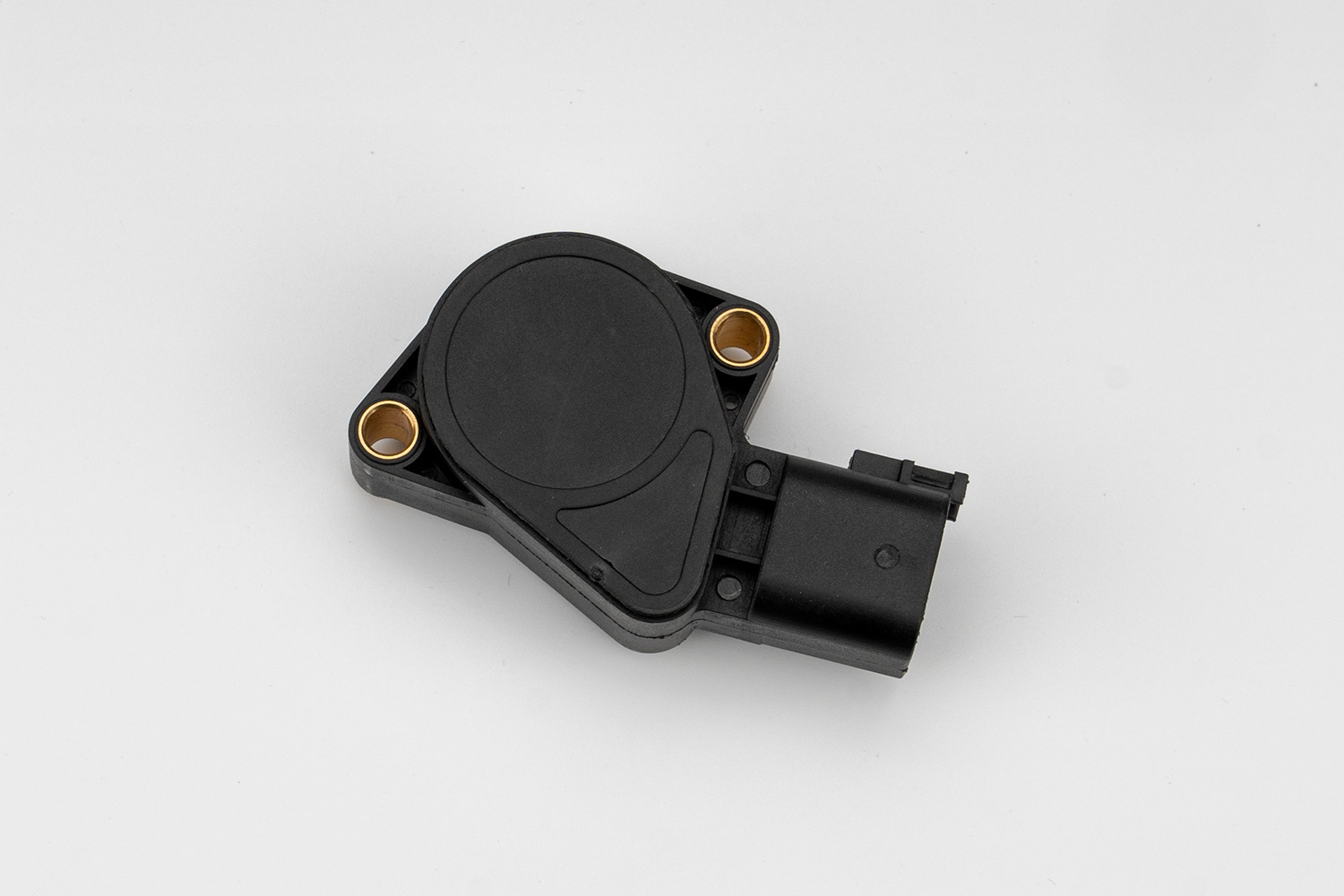
Basic structure and principle base
The throttle position sensor usually consists of a sliding rheostat and several contacts. It is essentially a device that converts the throttle position or opening into an electrical signal.
When the driver steps down the accelerator pedal, the throttle opening changes. Sensor components connected to the throttle shaft also move, which in turn alters the resistance value of the sliding resistor or the disconnected state of the contact. This ultimately produces a corresponding voltage signal, which is transmitted to the engine's electrical control unit (ECU).
How Different Types of Sensors Work
Linear output type throttle position sensor: This type of sensor has two contacts in conjunction with the throttle axis. A touch point can slide on the resistor, and as the throttle opening changes, the position of the sliding touch point on the resistors changes, causing the resistance value to change linearly, thereby converting the throttling position signal into the linearly changing voltage value VTA. Another contact contacts the idle contact IDL when the throttle is fully closed, and is used to output the idle condition signal to the ECU, The ECU perceives the throttle opening according to the VTA voltage signal, and then corrects the fuel injection amount, and can also identify the acceleration or deceleration mode according to the change rate of the signal voltage in a certain period.
Throttle position sensor: Also known as a throttle switch, it has two contacts, idle contact (IDL) and full load contact (PSW), which are opened and closed by a cam coaxially with the throttle. When the throttle is in the fully closed position, the idle contact IDL is closed, and the ECU determines that the engine is in idle mode according to this signal. It controls the fuel injection according to the idle mode requirements. When the throttle is open, the idle contact opens and the ECU performs fuel injection control from idle to low load transition. The full load trigger is always on during the throttle door from the full shut position to the mid-to-low opening range. When the throttling door opens to a certain angle, the full load trigger begins to close, signaling to the ECU that the engine is at full load, and the ECU performs full load enrichment control 4.
Integrated throttle position sensor. Contains a potentiometer and an idle speed contact. The sliding contact of the potentiometer is driven by the throttle shaft, which converts the throttling opening into a resistance or voltage signal sent to the microcomputer. When the throttle door is completely closed, the idle output touchpoint is switched on, and the sensor outputs the idling signal, which causes the ECU to instruct the jet to increase the fuel injection and make the mixture thicken to ensure the stable operation of the engine at idle.
Related News

Service Hotline:
Address: Wudu Machinery Return Pioneer Park, Xiushui County, Jiujiang City, Jiangxi Province
E-mail:getaisensor@163.com