


————
Full Understanding of Five Major Sensors on Cars
2024-10-16
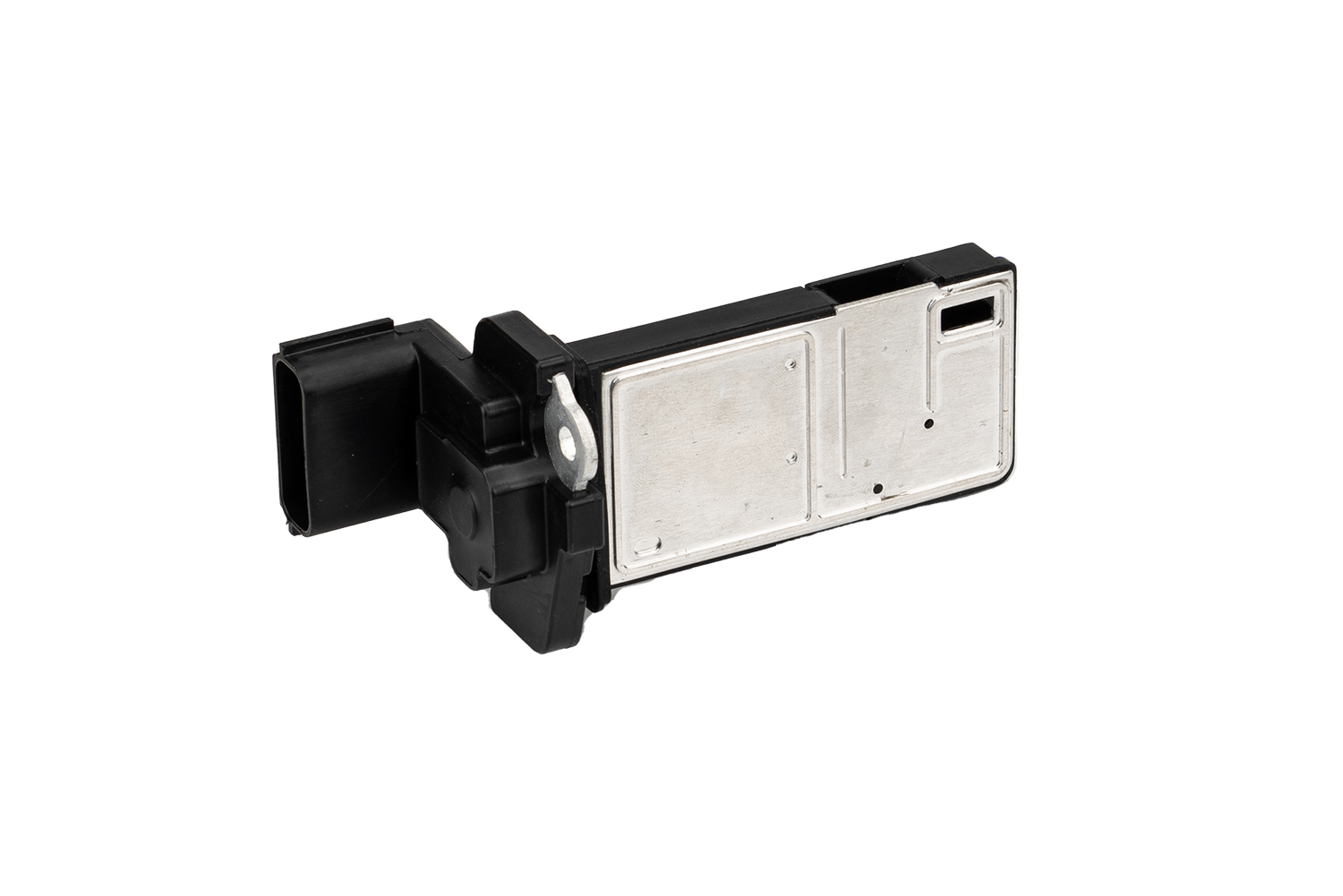
Car sensors are input devices for car computer systems. They convert various operating information during car operation, such as vehicle speed, temperature of various media, engine operating conditions, etc., into electrical signals and send them to the computer so that the engine is in the best working state.
1. Air flow sensor
The air flow sensor converts the inhaled air into electrical signals and sends them to the electronic control unit (ECU) as one of the basic signals for determining fuel injection. According to different measurement principles, it can be divided into four types: rotating vane air flow sensor (Toyota PREVIA station wagon), Karman vortex air flow sensor (Toyota Lexus LS400 sedan), hot wire air flow sensor (Nissan Maxima VG30E engine and domestic Tianjin Sanfeng bus TJ6481AQ4 Volvo B230F engine) and hot film air flow sensor. The first two are volume flow type, and the latter two are mass flow type. At present, the hot wire air flow sensor and hot film air flow sensor are mainly used.
2. Intake pressure sensor
The intake pressure sensor can measure the absolute pressure in the intake manifold according to the load state of the engine, and convert it into an electrical signal and a speed signal and send it to the computer as the basis for determining the basic injection amount of the injector. Domestic Audi 100 sedan (V6 engine), Santana 2000 sedan, Beijing Cherokee (25L engine), Toyota Crown 3.0 sedan, etc. all use this pressure sensor. At present, the semiconductor varistor intake pressure sensor is widely used.
3. Throttle position sensor
The throttle position sensor is installed on the throttle to detect the opening of the throttle. It is linked to the throttle through a lever mechanism, and then reflects the different working conditions of the engine. This sensor can detect different working conditions of the engine and input them into the electronic control unit (ECU), thereby controlling different injection amounts. It has three types: switch contact throttle position sensor (Santana 2000 sedan and Tianjin Sanfeng bus), linear variable resistor throttle position sensor (Beijing Cherokee), integrated throttle position sensor (domestic Audi 100 V6 engine)
4. Crankshaft position sensor
Also known as crankshaft angle sensor, it is the most important sensor in the computer-controlled ignition system. Its function is to detect the top dead center signal, crankshaft angle signal and engine speed signal, and input them into the computer, so that the computer can issue the best ignition timing instruction according to the ignition sequence of the cylinder. There are three types of crankshaft position sensors: electromagnetic pulse crankshaft position sensor, Hall effect crankshaft position sensor (Santana 2000 sedan and Beijing Cherokee), photoelectric effect crankshaft position sensor. Different types of crankshaft position sensors have different control methods and control accuracy. The crankshaft position sensor is generally installed on the side of the crankshaft pulley or sprocket, some are installed on the front end of the camshaft, and some are installed on the distributor (Santana 2000 sedan).
5. Knock sensor
The knock sensor is installed on the cylinder of the engine to monitor the knock of the engine at any time. There are two types of wipers currently used: resonant and non-resonant. When it rains, the wipers on the windshields of large and small cars will move together, and the two wiper blades will swing around the fixed shaft column to wipe off the rain on the windshield, giving the driver an effective field of vision.
The earliest wipers consisted of a rocker arm and an arm with a rubber wiper blade, which was manually operated by the driver. Later, in order to see the position, wiper arms were installed on both sides and connected with connecting rods to become manual double wiper blades, which is the original type of today's car wipers.
Later wipers used air pressure difference to replace manpower, which was called vacuum wipers. Connected to the engine with a pipe, the vacuum of the engine is used to drive the piston inside the wiper, push the swing arm to rotate, and the wiper blade can move. In the early 1940s, electric wipers were installed on cars to replace vacuum wipers. However, until the early 1980s, some trucks and buses in my country still used vacuum wipers. Now, all cars use electric wipers.
The wiper looks simple, but in fact, its structure is not simple. The wiper assembly contains a motor reducer, a four-bar linkage, a wiper arm spindle, a wiper blade assembly, etc. When the driver presses the wiper switch, the motor starts, and the motor speed drives the swing arm through the deceleration and torque increase of the worm gear, and the swing arm drives the four-bar linkage, which drives the shaft installed on the front panel to swing left and right, and finally the shaft drives the wiper blade to wipe the windshield.
Now, there are two wiper arms in a car, and the motor is generally one, which is called "single machine double arm". There are also wipers with one motor each, which is called "single machine single arm". Some wiper arms also come with glue pipes, which are connected to the washer. When the switch is pressed, water will be sprayed onto the windshield. In some mid-to-high-end cars, not only the front and rear windshields have wipers, but also the headlights have a small wiper blade to remove dust from the headlight glass. When the driver turns off the wiper, the wiper arm often does not stop in the appropriate position, obstructing the driver's sight. To solve this problem, the wiper is equipped with a return switch, which controls the wiper motor. When the wiper arm stops at the appropriate position under the windshield, the motor will stop running. Today's wipers have generally adopted fast gear, slow gear and intermittent control gear. Among them, the intermittent control gear generally uses the charge and discharge function of the motor's return switch contacts and the resistor and capacitor to make the wiper wipe in a certain period, that is, each action stops for 2-12 seconds, which interferes less with the driver. Some vehicles' wipers are also equipped with electronic speed regulators, which have a sensing function and can automatically adjust the swing speed of the rain arm according to the amount of rain. The wiper arm rotates faster when the rain is heavy, and slower when the rain is light. The wiper arm also stops when the rain stops.
Jiangxi Getai Auto Parts Co,,Ltd is specialized in manufacturing auto parts, especially mass air flow sensor, throttle position sensor, idle motor in China since 2010. We’ve winned great reputation and polularity by demostic and overseas customers due to our solid quality, competitive price and all-roung after-sale service. Welcome to send inquiry and for further information, kindly check our official website at en.getaimaf.com.


Related News

Service Hotline:
Address: Wudu Machinery Return Pioneer Park, Xiushui County, Jiujiang City, Jiangxi Province
E-mail:getaisensor@163.com